.png)
Client
Website
The Business Context
When I stepped into the Head of Brand role in August 2023, I inherited both a creative problem and a trust deficit with leadership.
A year earlier, a $1M rebrand initiative had been killed. A US-based CMO had fully embedded an agency, developed multiple strategy documents and gained initial buy-in. Due to a lack of confidence in the approach and the cost, the CEO stopped it after kickoff had begun.
The fallout left leadership wary of big brand investments. Creative became tactical execution rather than strategic thinking and trust in the function had eroded.
Meanwhile, the brand itself reflected that reality. Dated expression appealing to older demographics. Post-launch feedback cycles causing constant rework for the team, no strategic clarity and inconsistent application across markets.
As the company scaled from 50 to 300 employees globally, the gap between our ambition and our brand maturity widened.
The Challenge
I couldn't propose another big rebrand as there was no budget and limited trust.
I needed to understand the real problem. I worked with the agency Webber Shandwick to conduct a competitive audit. The findings confirmed what I suspected: competitors owned 'trusted' while we were perceived as unreliable. We had minimal media presence, no thought leadership and B2B buyers questioned our legitimacy.
We were growing fast in performance channels, but brand perception lagged commercial reality. The US showed triple-digit revenue growth yet only 4% brand awareness.
I also implemented Tracksuit to establish measurement infrastructure. The baseline: 34% awareness in Australia, 14% in the UK, 4% in the US. We had significant room for opportunity and growth.
I presented this to the executive team to communicate that performance marketing alone wouldn't build long-term business value. They were cautious, but over time they started to understand the gap.
The Approach
I made three key decisions that impacted the direction we took:
Lean into emotion, not away from it
Competitive research showed we were already the most emotionally led brand in the category. Rather than dilute that to appear more like competitors, I chose to double down on emotional storytelling as our strategic advantage.
Build leadership trust through delivery and communication
I focused on rebuilding credibility incrementally. I reframed how creative was presented internally, moving from showing work to articulating strategic intent and business alignment. This shifted leadership from reactive micromanagement to structured pre-launch collaboration. As a result, feedback rounds reduced and trust increased.
Establish measurement infrastructure
Tracksuit gave us the data foundation. Now we had data to help leadership understand how business and financial decisions impacted our brand goals.
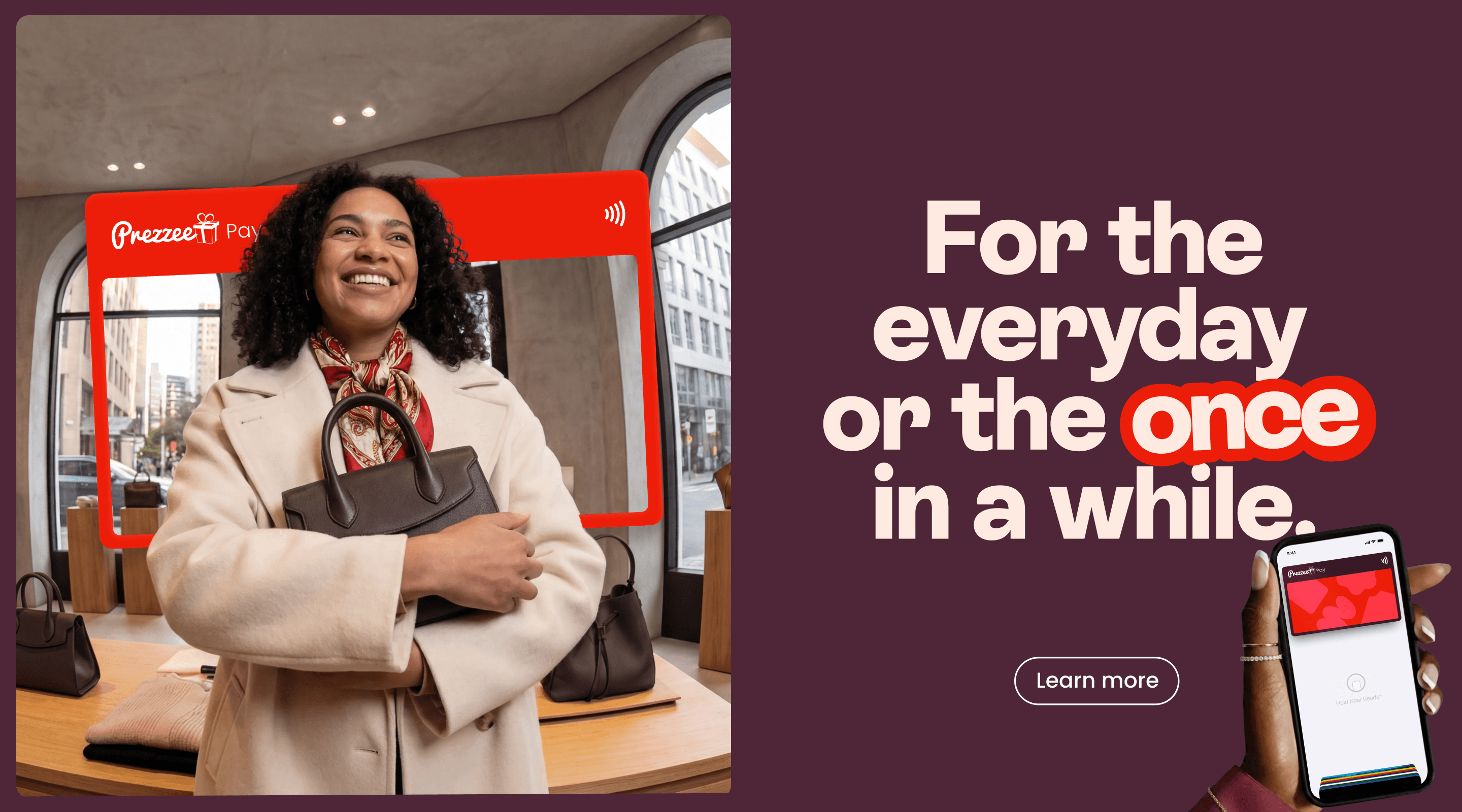
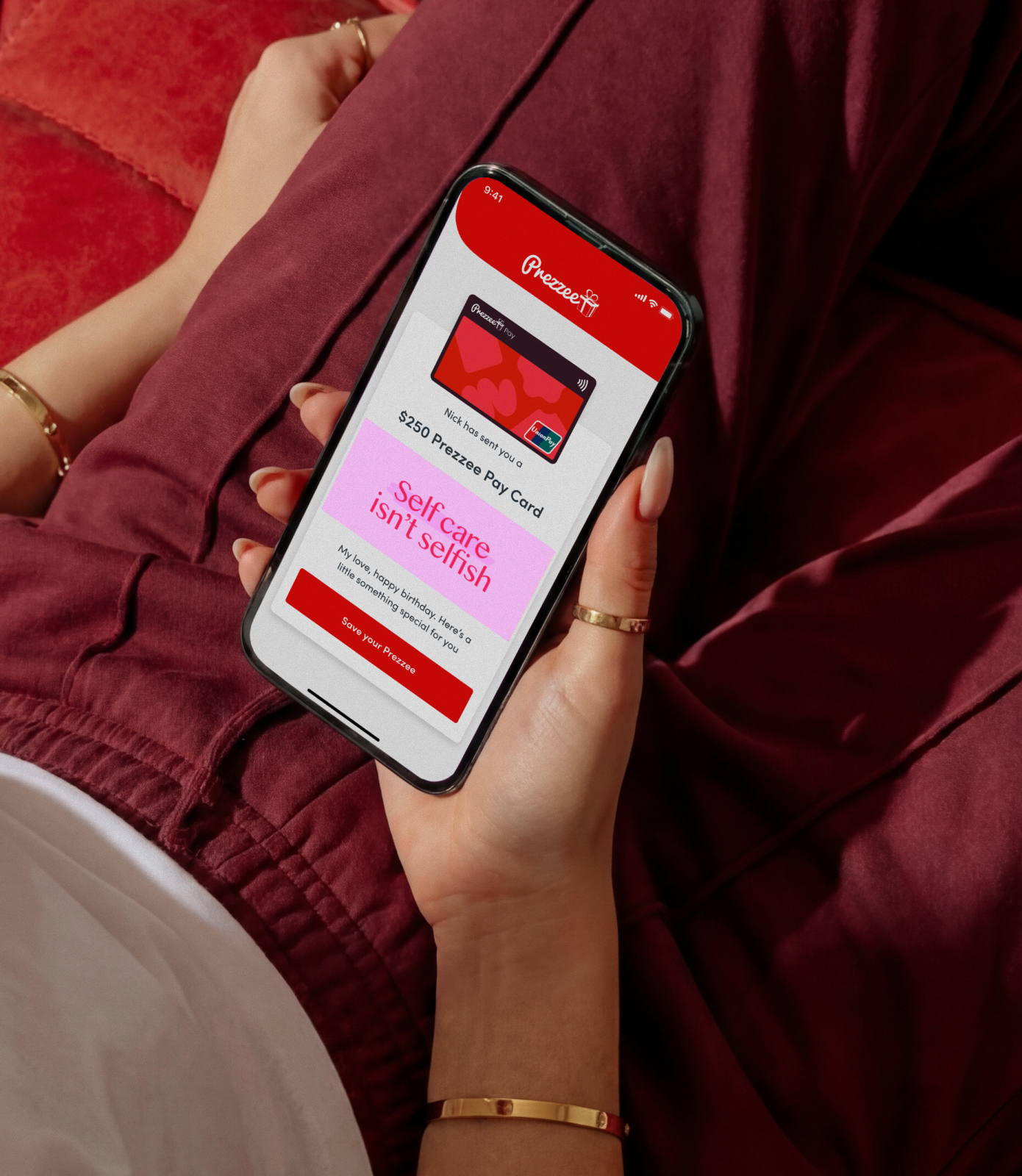
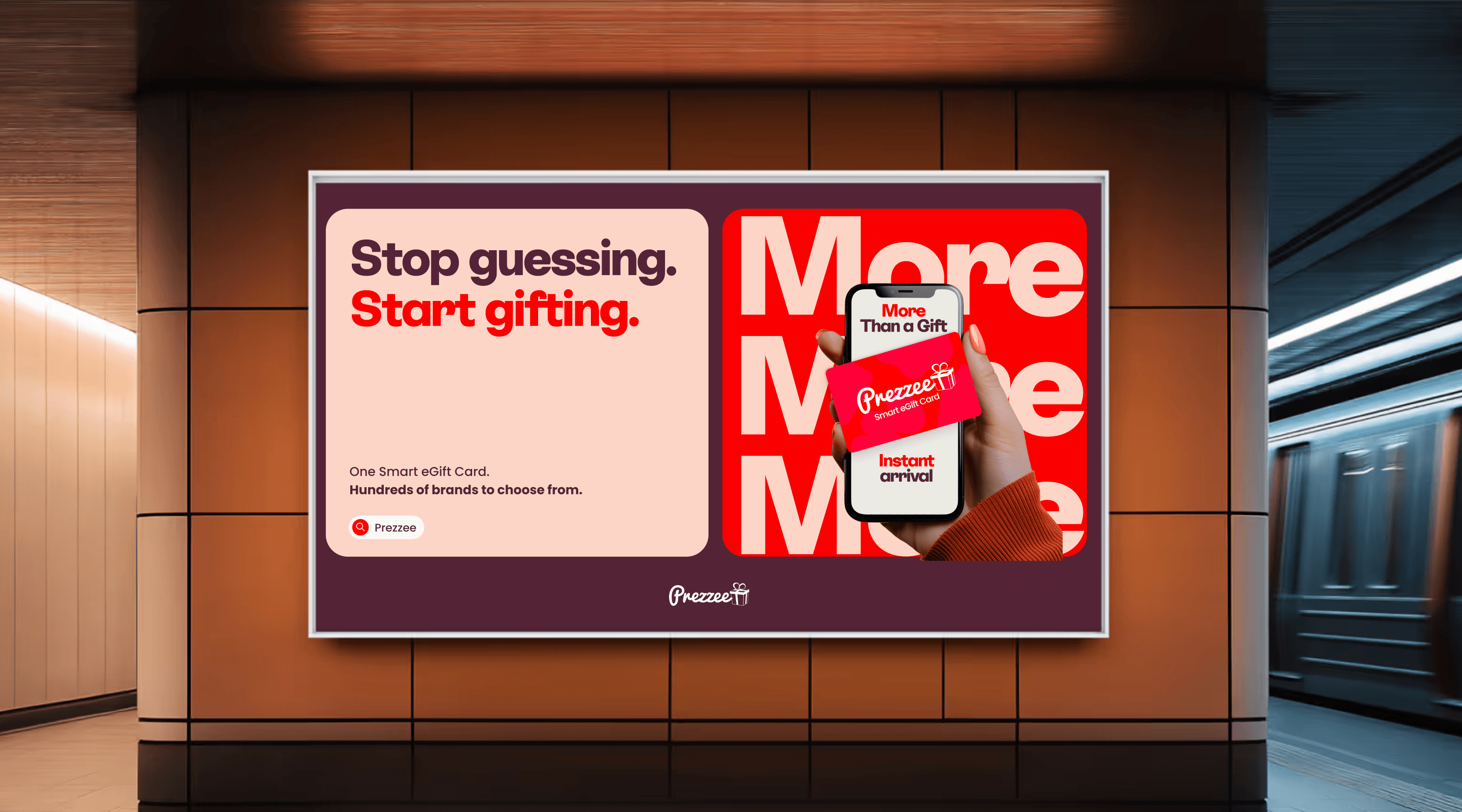
With these principles in place, we overhauled the brand expression, modernised the visual identity, built scalable guidelines for global teams, established consistent application across markets and increased investment in both brand and campaign creative.
The Impact
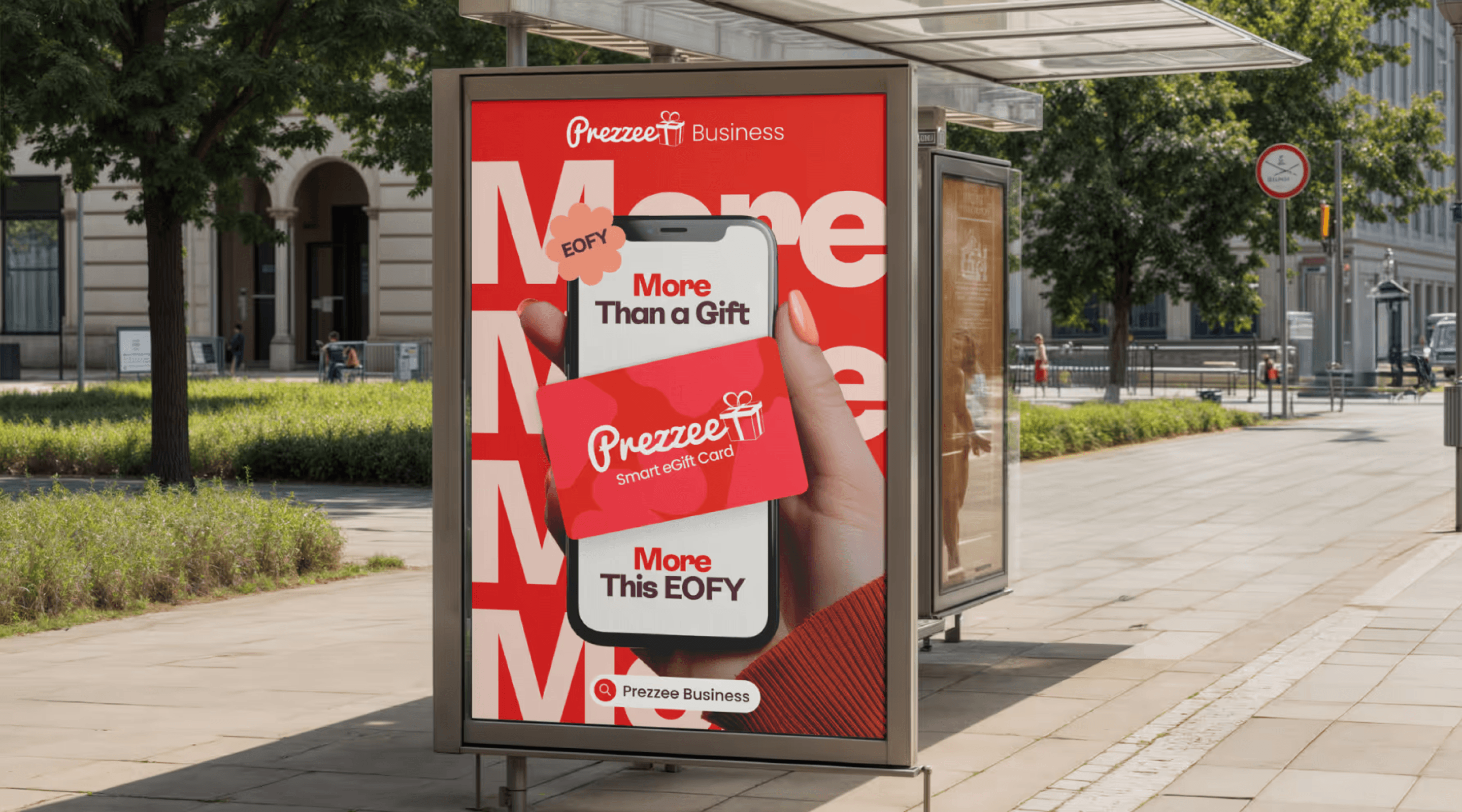
Over three years we had significant business growth and investment into brand and creative. Christmas 2025 was our most ambitious campaign, with a creative budget increase from roughly $20-30K in prior years to $250K.
Commercial results also validated the strategy—peak performance in November and December delivered double-digit growth across all channels. B2C saw 30% revenue growth in Australia and 105% in the US. B2B showed strong results, adding $2.8M year on year. Our strongest ever Christmas.
The brand metrics were equally positive, with awareness shifting to 39% in Australia. In the US, branded search for 'Prezzee' grew 61% year on year while the generic gift card category grew just 2%. In Australia, branded search grew 16% against 2% category growth. December recorded the highest search indexing ever for Prezzee.
We also won six international awards for creative AI innovation. The data proved that the emotional brand platform was connecting with our customers and that brand investment drives performance efficiency.
What This Unlocked
Leadership shifted from seeing brand as cosmetic to viewing it as strategic investment. The creative team went from order-takers to strategic partners. Post-launch rework reduced significantly and confidence in upper-funnel creative grew.
We built a digital-first brand system that works across global markets, created repeatable processes that balance speed with quality and established an agency ecosystem that supports our creative ambitions.
We've proved that emotional brand work drives both awareness and conversion. Tracksuit gave us the measurement infrastructure to demonstrate ROI and we built the business case for shifting to a 50/50 brand-performance budget split.
Leadership Reflection
The biggest shift in my role was moving from owning creative output to building systems and advocating for strategy.
Rebuilding trust required sustained influence, clear communication of business value and patience.
Christmas 2025 wasn't luck. It was the result of positioning clarity, measurement infrastructure and getting leadership aligned over multiple quarters. The experience proved that creative quality alone doesn't unlock budget or autonomy. Strategic articulation and commercial proof do.
.png)


.png)

.png)