Client
Website
The Business Context
Over several years, technical debt had quietly compounded across our website stack. Marketing relied on a custom CMS that required developer sign-off for even minor changes.
The impact went beyond inconvenience and started affecting our ability to execute. Campaign launches were delayed by months, SEO optimisation remained out of reach and engineering time was constantly pulled away from product work to support marketing requests.
We couldn't respond to opportunities at the pace required and what started as an operational issue had become a commercial problem limiting our ability to compete.
The Challenge
I'd identified Webflow as the solution early in my tenure, but initial proposals were blocked because leadership saw it as too risky and the organisation was resistant to another major change.
The technical challenge was significant. We needed to migrate marketing pages to Webflow while maintaining the custom shopping experience, which required reverse proxy architecture so Webflow pages appeared native to our domain. This meant cross-functional alignment across Marketing, Product, Engineering and Infrastructure.
The harder challenge was organisational rather than technical. I'd been advocating for this migration for years but the developers consistently pushed back, change fatigue across the organisation was real and leadership needed proof it would work before they'd commit to the investment.
The Approach
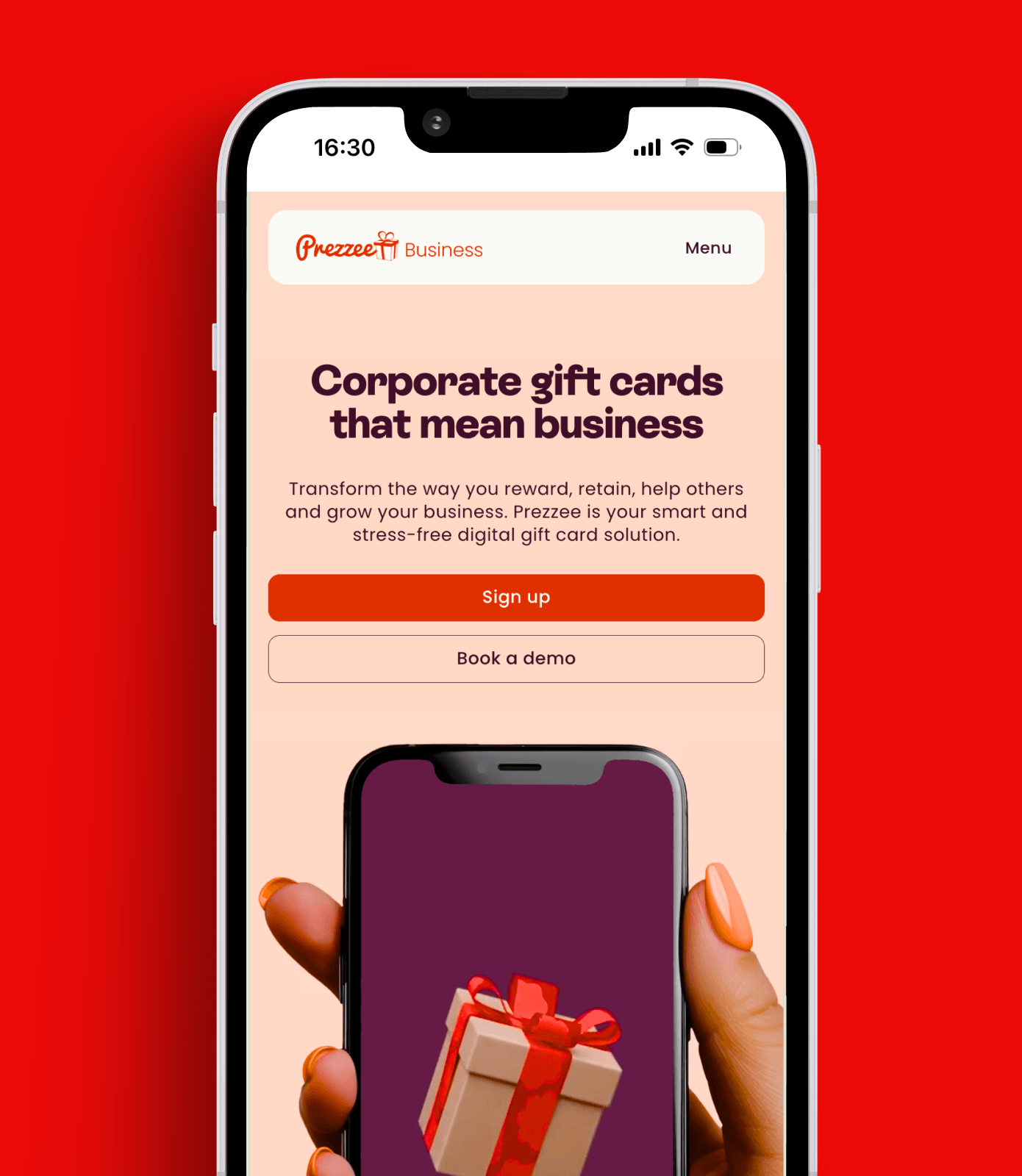
The turning point came when speed became non-negotiable. I made a deal with leadership: let me rebuild the current Prezzee Business Homepage in Webflow to meet a fixed Christmas deadline.
It launched successfully and proved that both quality and speed could improve simultaneously. That proof point shifted the conversation to 'Why aren't we doing more of this?' and gave me the mandate to continue to build and improve our websites.
Phase 1: B2B Foundation
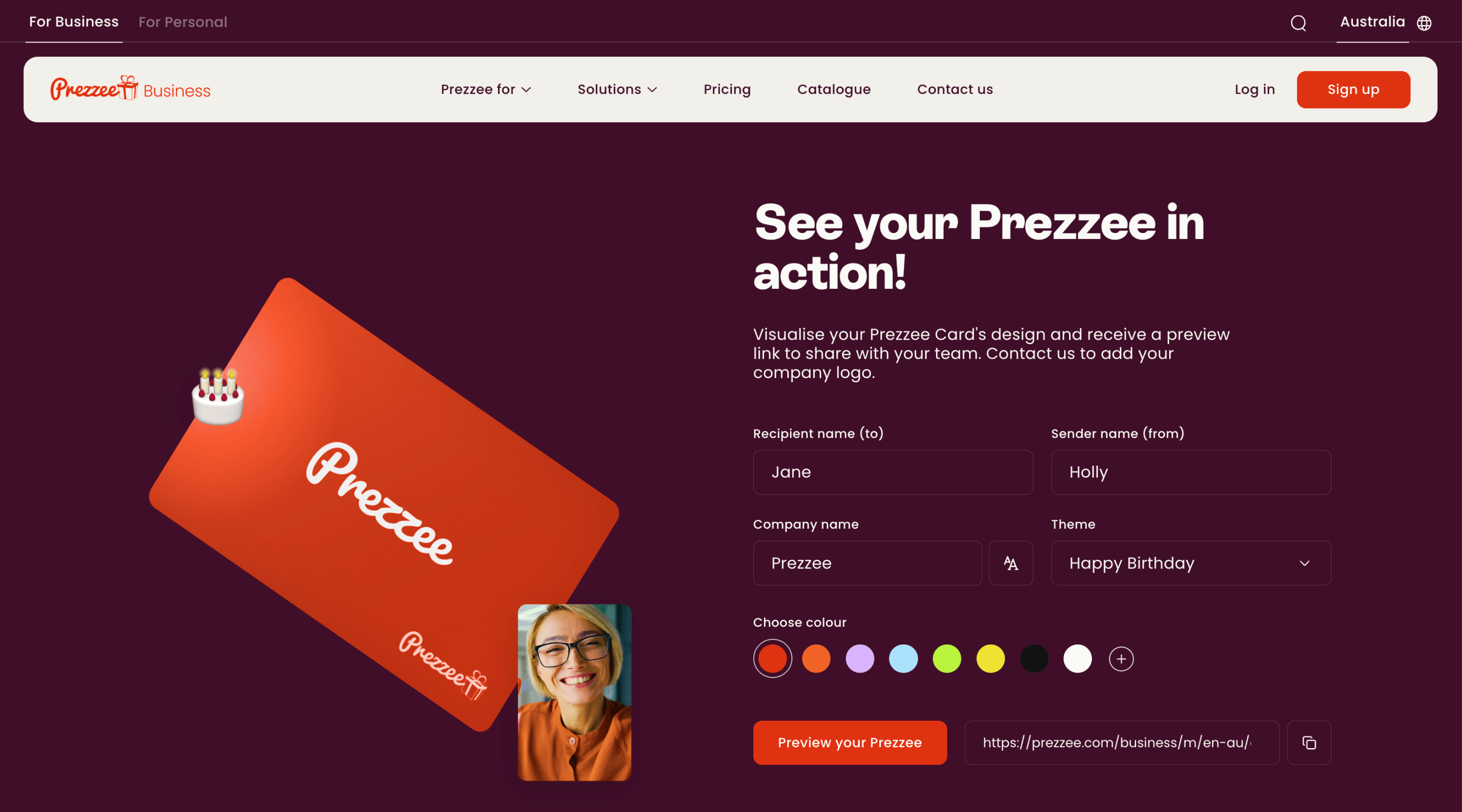
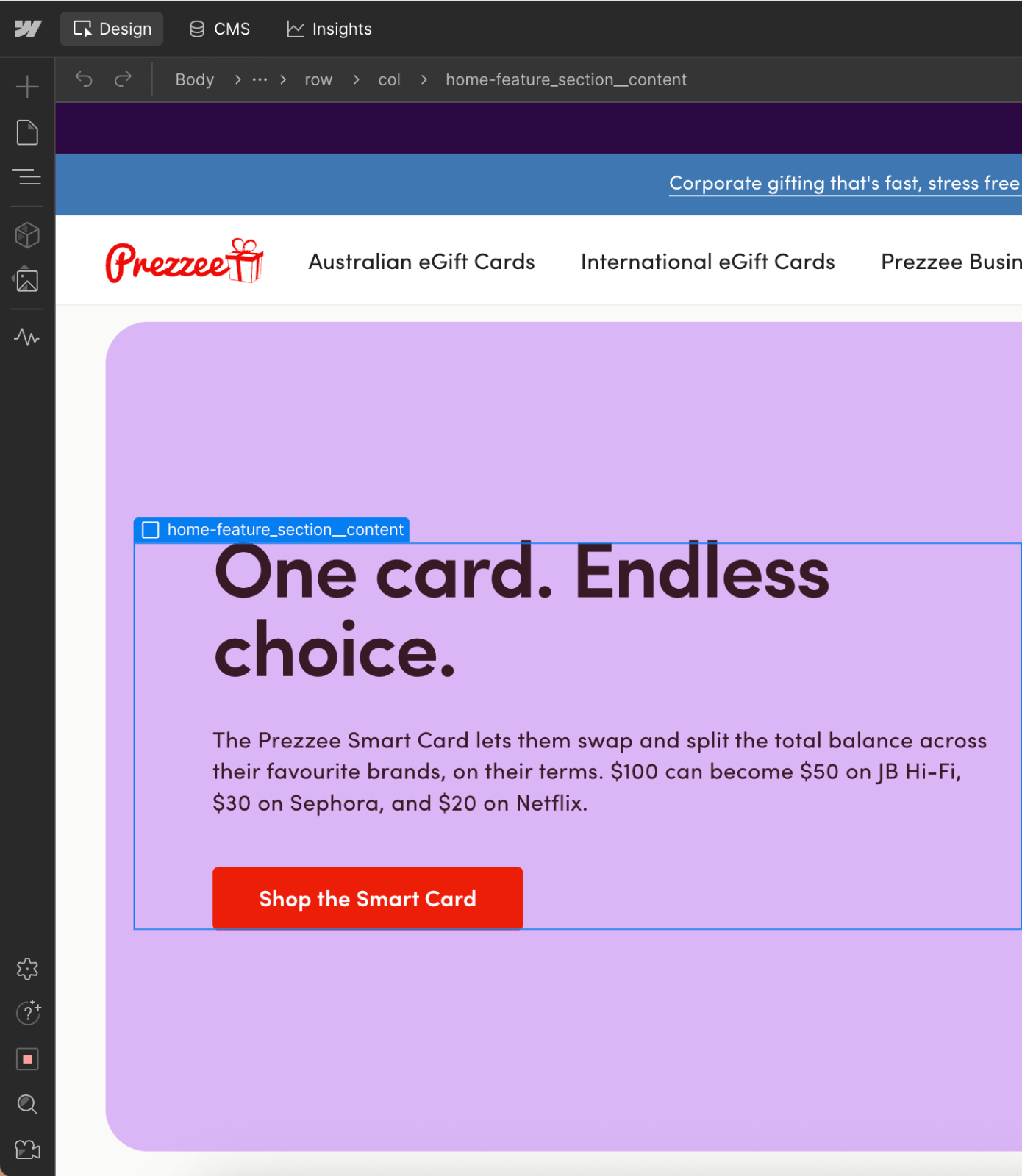
I led a full redesign of the Prezzee Business website in partnership with an external agency, which established elevated and modernised brand expression, increased content and information availability for customers, built a scalable component system, created a CMS-enabled hub for SEO and gave marketing full control within Webflow. This reset the quality and speed benchmark for all digital work within the business.
Phase 2: B2C Migration
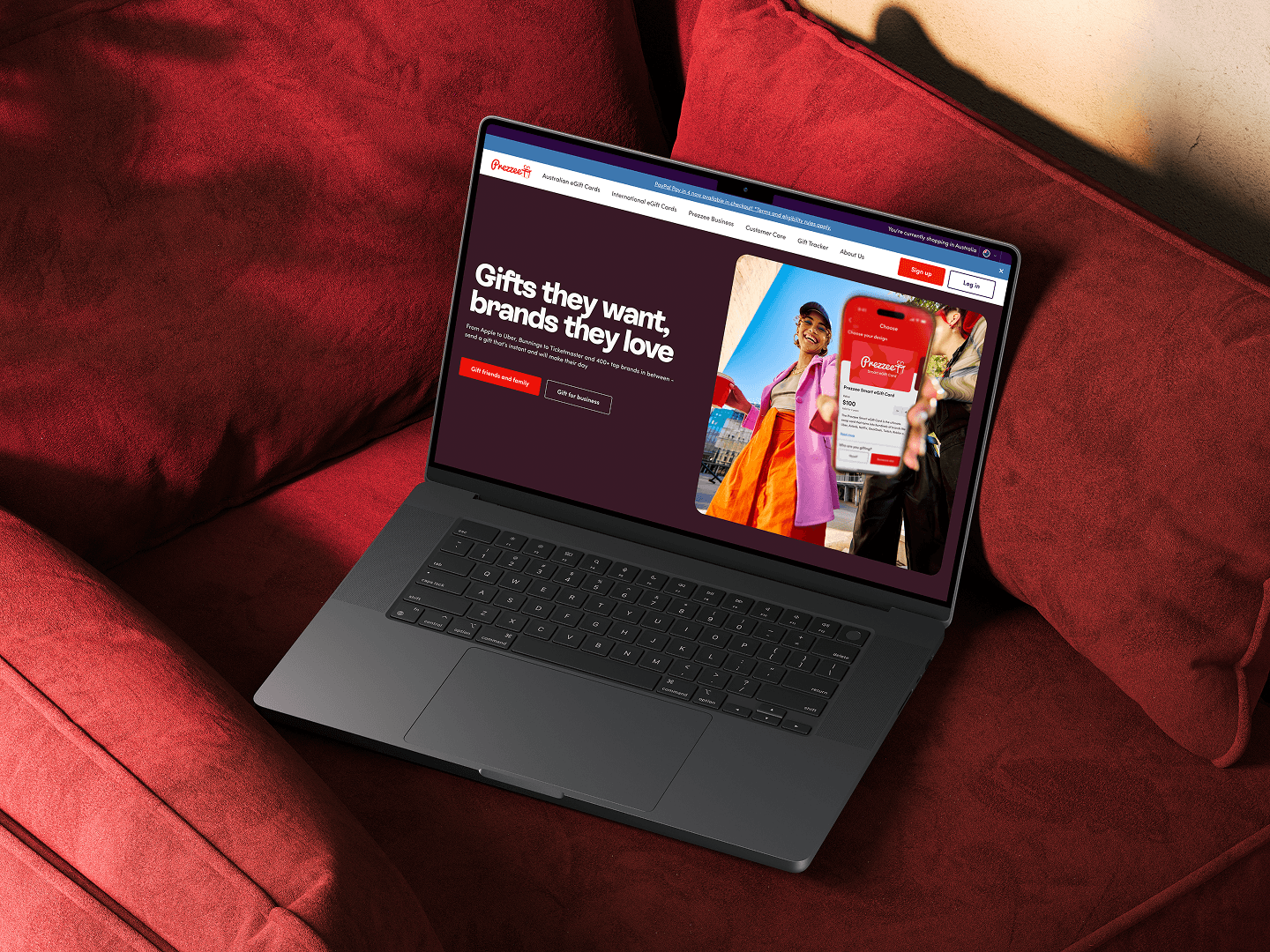
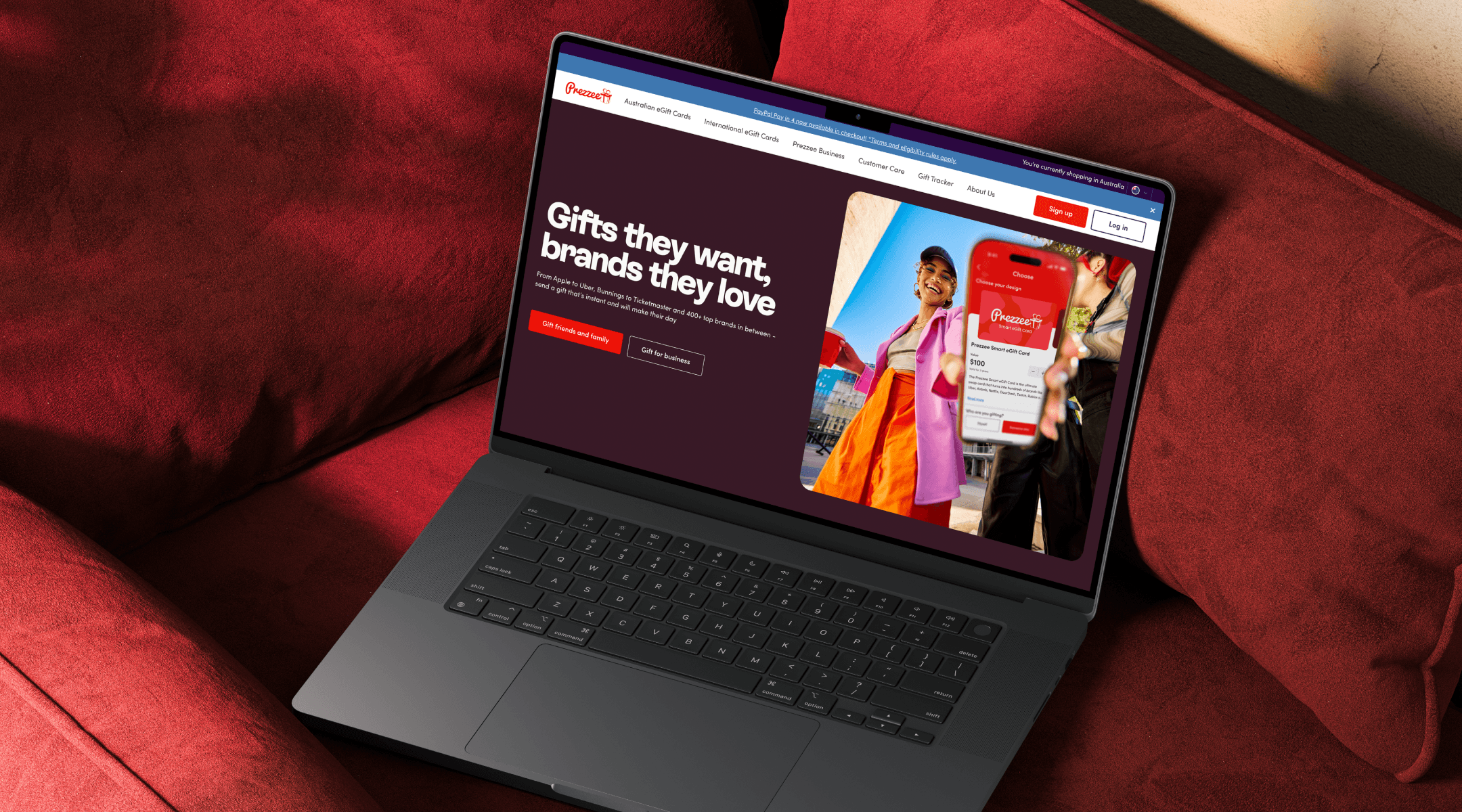
In collaboration with Product, Engineering and Infrastructure, we migrated all marketing-owned consumer pages to Webflow while maintaining the custom shopping experience. This required technical integration work to ensure a seamless user experience, governance frameworks to balance autonomy with brand integrity and structured training to upskill marketing teams on the new platform.
This was a fundamental shift in operating model that moved marketing from dependency to ownership.
The Impact
Growth Enablement
Marketing regained control of SEO optimisation, gained ability to launch and iterate without product prioritisation and removed structural tech bottlenecks impacting commercial velocity.
Speed
Campaign landing pages reduced from months to days. Major structural additions that would've taken over a year now take a few weeks.
Volume and Quality
Landing pages now launched for all major campaigns. We saw significant uplift in visual consistency and polish. Animation and interactive brand expression that was previously impossible became standard.
Engineering Focus
Significant reduction in marketing-related development requests meant engineering resources could redirect toward core product innovation.
While performance data is still being measured, the business delivered its strongest Christmas to date following the migration. A strong signal that improved digital experience supports commercial growth.
What This Unlocked
The migration unlocked speed and agility that changed how we operate. Marketing can now react to market opportunities in days rather than months, campaign delivery cycles accelerated significantly and we launched new markets like Canada, Ireland and France with minimal friction. Two additional market launches are scheduled for this year.
Product delivery improved as well. The launch of new products like Prezzee Pay happened faster because marketing pages were no longer dependent on engineering prioritisation. Both Product and Marketing teams adopted Webflow, which reduced friction between teams and created shared ownership of the digital experience.
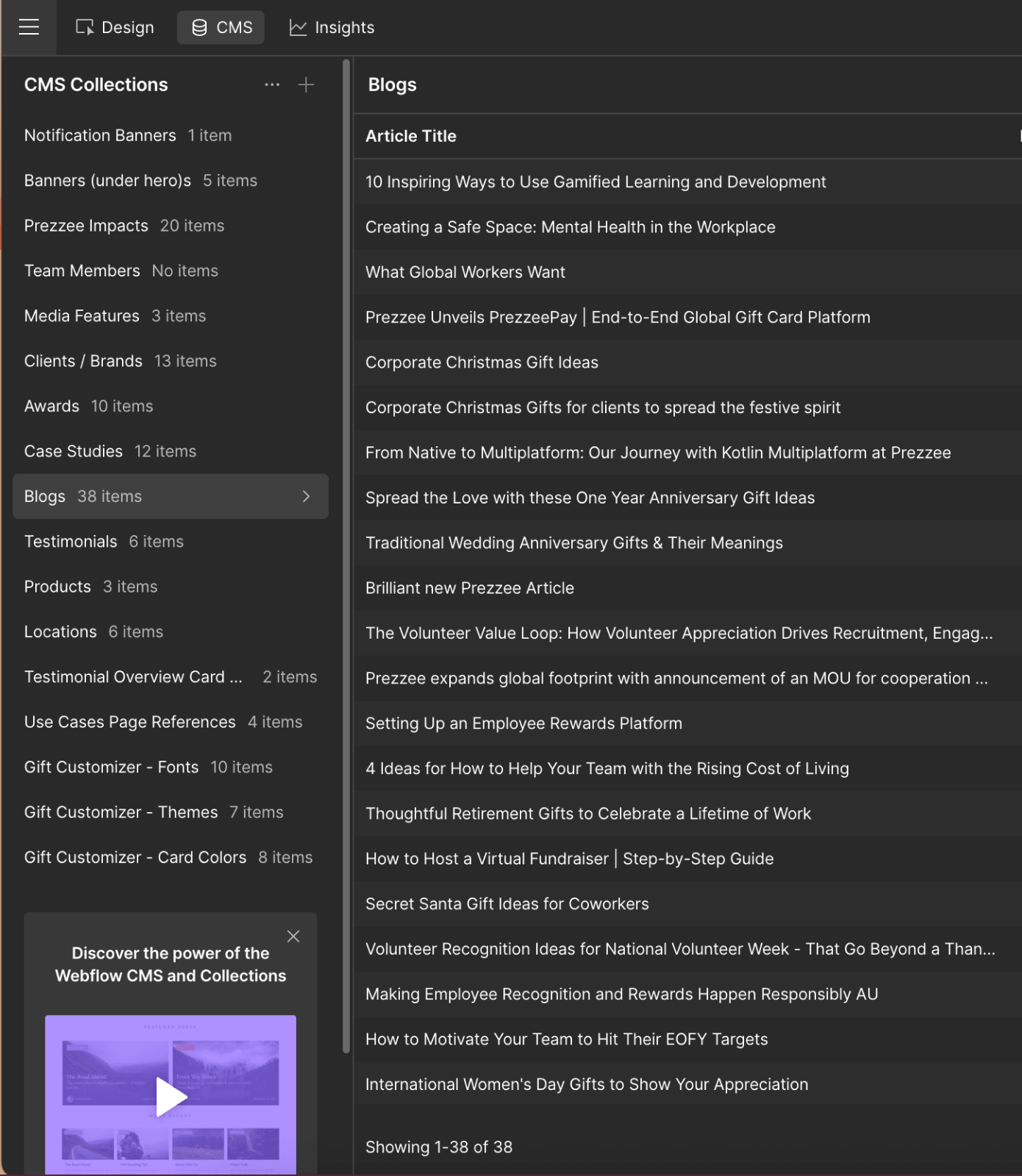
The CMS transformation had immediate impact. Marketing had previously been working with a difficult and unreliable CMS that regularly lost hours or days of work. Moving to Webflow gave teams a stable platform they could actually understand and use effectively.
Customer experience improved measurably. Brand perception strengthened, customers gained better understanding of our product offering and the percentage of customers finding what they were looking for increased significantly. We could test, learn and optimise at the pace the business needed.
Leadership Reflection
Influencing change in a fast-moving environment required constant repetition across multiple stakeholders, confidence in the long-term vision and building allies across Product and Engineering who could champion the work internally. I learned that demonstrating value through proof mattered more than winning debates.

.png)